
Slanted Wall Decor: Transform Angled Spaces with Ease
Key Takeaways
- Slanted wall decor works best when you plan by zones, align art intentionally to the floor, ceiling, or slope, and keep layouts simple;
- Lightweight, adhesive, repositionable frames like Mixtiles make hanging on angled walls fast, damage free, and adjustable;
- Use consistent spacing, cohesive color stories, and layered lighting to turn awkward angles into standout features;
- Avoid heavy frames, random alignments, and clutter. Choose flexible grids or organic clusters sized to the slope.
Slanted walls can be the most character rich part of your home, yet the hardest to decorate. The good news is that with a few layout tricks and the right frames, you can turn angled surfaces into stunning focal points. This guide shows you how to plan, align, and hang decor on slanted walls without stress or holes. You will see gallery layouts that work with your architecture, lighting tips, and mistakes to avoid. You will also learn why adhesive, photo tiles from Mixtiles make decorating slanted walls simple and damage free.
Create your slanted wall gallery in only minutes. Upload photos in the Mixtiles app or on the website to design your own wall photo tiles and preview layouts before you stick.
What makes slanted wall decor tricky, and how do you turn it into a design advantage?
Angles change sightlines and usable height, which can make art feel crooked or crowded. The fix is to choose a single alignment rule, plan by ceiling height zones, and use lightweight, modular art that works with your architecture instead of fighting it.
First, decide whether to embrace or soften the angle. If your roofline is dramatic, echo it with a diagonal gallery. If the room feels chopped up, minimize visual noise by choosing one alignment rule and a calm color story. Second, plan by zones. Place taller furniture and decor where the ceiling is highest, then transition to lower pieces toward the eaves. Finally, choose light materials that are easy to adjust. This is where Mixtiles shine. Each tile is lightweight and adhesive, so you can test, restick, and refine spacing without tools or wall damage.
How do you plan a gallery on a slanted wall without guesswork?
Start by measuring the angle and mapping comfortable viewing heights, then commit to one anchor line. Choose a layout style that suits your slope, and mock it up before sticking anything to the wall.
Measure and map the angle

Measure ceiling height at several points along the slanted wall and note where you can stand versus sit comfortably. Use painter’s tape to outline the highest and lowest boundaries you want your gallery to occupy. This quick visual will keep your arrangement inside a zone that looks intentional and feels easy to view.
Define your anchor line

Pick one reference for alignment: the floor, the ceiling, or the slope itself. Most rooms look stable when art aligns to the floor. Aligning to the ceiling can unify tight attic rooms. Aligning to the slope creates bold motion and can be beautiful in lofts and stairwells. Commit to one rule so the eye reads the gallery as a single composition.
Choose a layout style

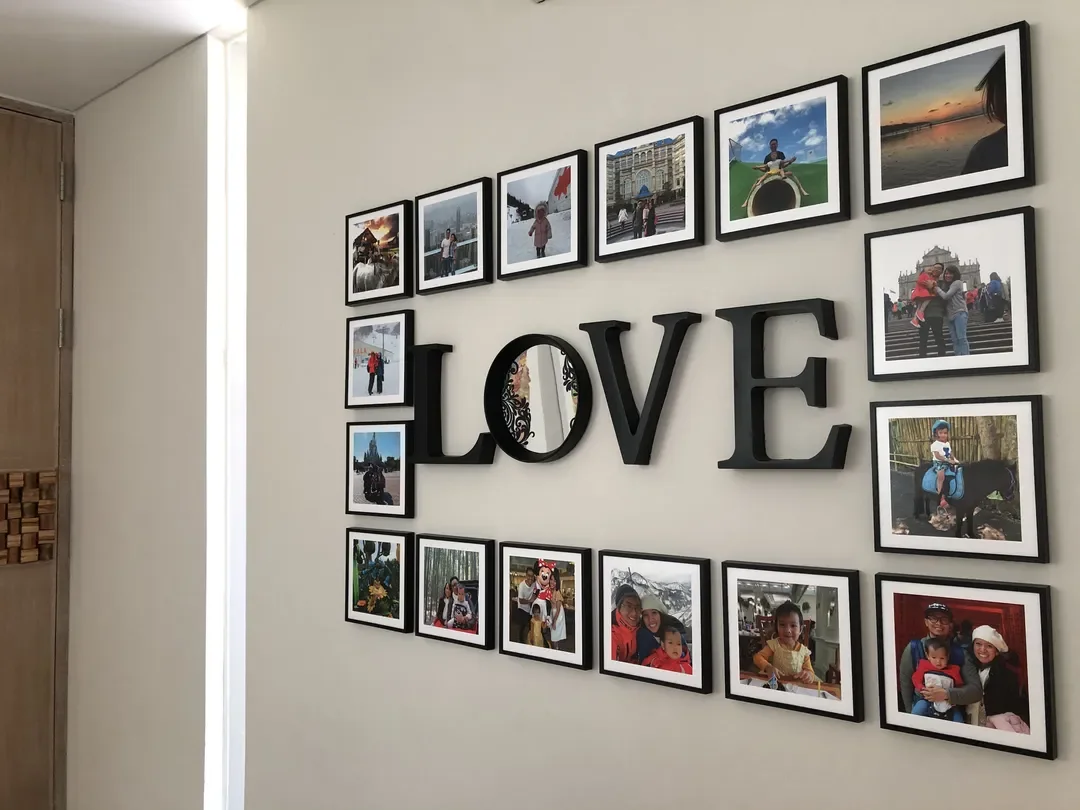
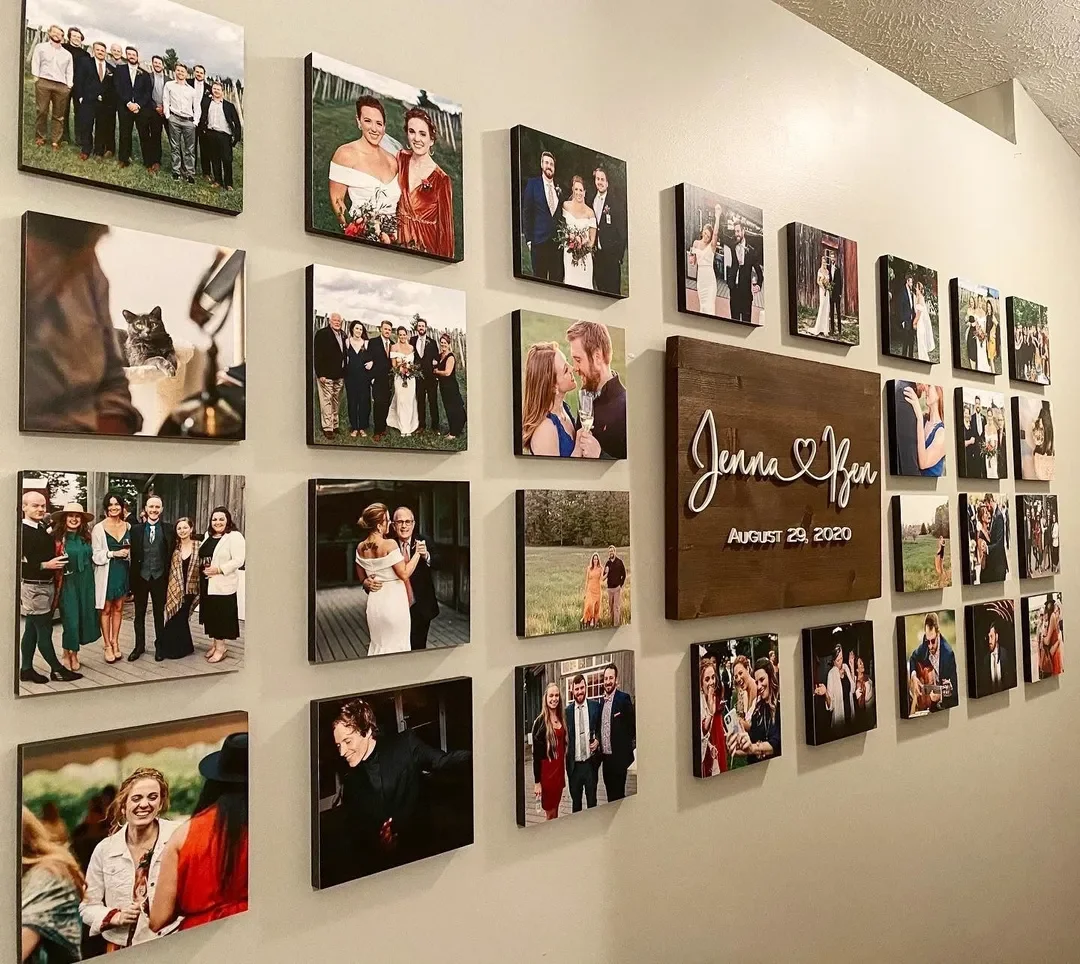
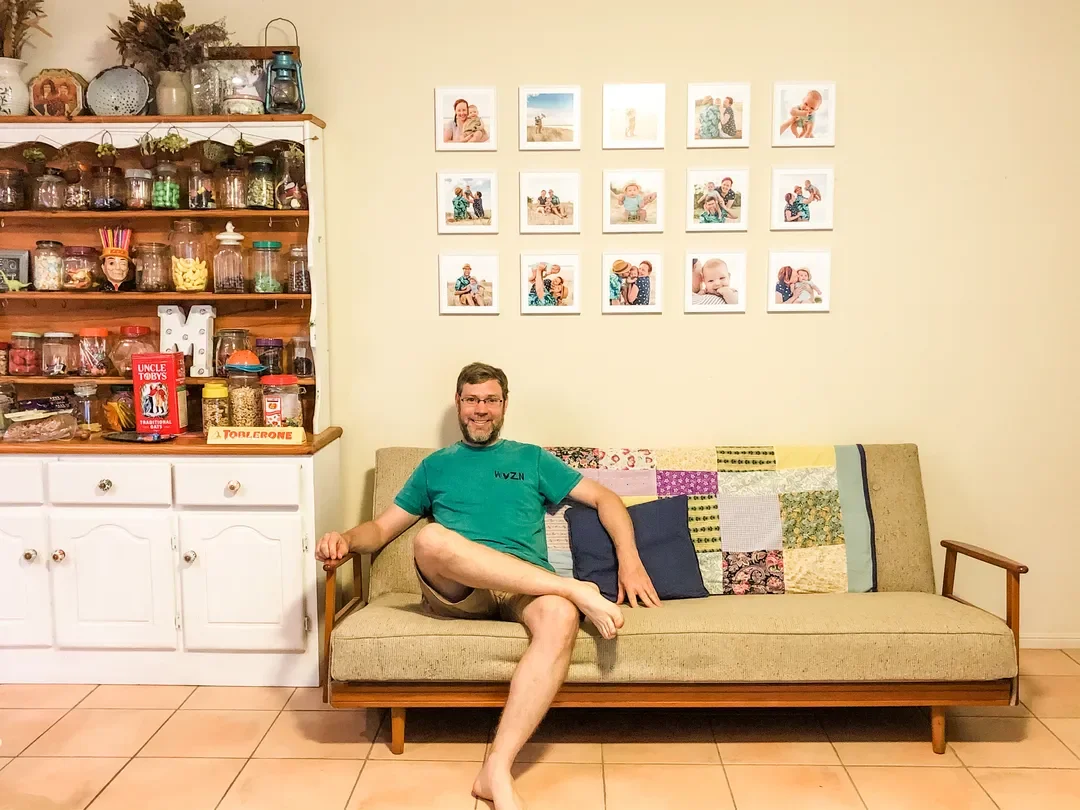
A structured grid feels calm and modern and is ideal when you want to downplay complex architecture. A stair step or diagonal cascade mirrors the slope and adds energy. An organic cluster is forgiving on irregular angles and works well in dormer nooks. If you are unsure, lay out tiles on the floor first, photograph the arrangement, then translate it to the wall.
Planning checklist
|
Checklist item |
Why it matters |
|---|---|
|
One alignment rule |
Prevents visual wobble and makes the gallery read as one piece. |
|
Even spacing, for example 2 in or 5 cm |
Creates rhythm and looks intentional even on angled planes. |
|
Cohesive color story |
Calms busy angles and ties photos to textiles or wood tones. |
|
Scale to the slope |
Keeps outer edges within comfortable reach and head clearance. |
Should you align art with the floor, ceiling, or the slope itself?
Most spaces look best when art aligns to the floor. For strong architectural drama, echo the slope. In very low rooms, ceiling alignment can simplify the visual field. Pick one approach and use it consistently.
Align with the floor, the most common and most stable
This reads straight to the eye, is easy to level, and pairs well with furniture lines. Bedrooms, living rooms, and offices usually look best with floor alignment because furniture anchors the composition.
Align with the slope, bold and architectural
This echoes the roofline and creates motion. It is ideal for stairwells, lofts, or a statement eave. Keep spacing identical along the diagonal so the line feels deliberate.
Align with the ceiling, when the ceiling reads as the visual horizon
In tight attics and dormers, ceiling alignment can reduce a choppy look. Keep a clean margin between the top of the gallery and the ceiling line to avoid crowding.
What gallery layouts work best for angled and attic walls?
Choose layouts that respect your highest and lowest usable heights. Slim grids sit nicely under eaves, diagonal runs track the slope, triptychs create focus, and cozy clusters fill niches without looking cramped.
Slim grid under the eave
Create one or two low rows that fit the knee wall. Repeat sizes for a calm rhythm and keep the top edge clear of the roofline so the gallery can breathe.
Diagonal run that mirrors the slope
Arrange three to seven tiles stepping upward at the same angle as your ceiling. Match the gap between tiles along the run to keep the motion smooth.
Offset triptych or panorama
Split a wide photo across three tiles and center it in the tallest usable section of the wall. This brings focus without overwhelming the space.
Cozy cluster in a dormer nook
Group three, five, or seven tiles at seated eye level. Keep the outer edges away from the ceiling line so the cluster looks intentional, not squeezed.
Popular Mixtiles sizes for slanted walls
|
Tile size |
Metric |
Best zone on angled walls |
Typical use |
|---|---|---|---|
|
8 × 8 in |
20.32 × 20.32 cm |
Low knee walls and tight nooks |
Clusters, small grids, kids’ rooms |
|
12 × 12 in |
30.48 × 30.48 cm |
Mid height sections |
Slim grids, stair step runs |
|
12 × 16 in |
30.48 × 40.64 cm |
Tallest areas |
Triptychs, statement images |
|
20 × 20 in |
50.80 × 50.80 cm |
Full height walls |
Hero pieces, above sofas or headboards |
Mixtiles also offers canvas tiles and fine art prints in multiple sizes. You can mix sizes in one order and preview scale before you buy.
Try layouts risk free. Build the perfect photo gallery wall with Mixtiles. Our tiles stick and restick, so you can test a grid or a cluster and swap until it is perfect. No nails, no stress.
Which images, colors, and frames flatter slanted spaces?
Pick images that match the shape and mood of the wall. Keep a tight color palette to calm the angles, and choose slim, lightweight frames or frameless styles for a clean look.
Image selection
Use panoramas or landscapes for long low walls. Choose close up portraits and detail shots for cozy nooks. Thematic sets like travel memories, family milestones, or black and white collections create cohesion on complex architecture.
Color and cohesion
Limit your palette to a couple of accent hues repeated from textiles or wood beams. Monochrome sets are especially effective because they reduce visual chatter and let the architecture shine.
Frame style
Pick slim frames with consistent border sizes or try frameless tiles for ultra clean lines. If you want a curated look fast, explore Mixtiles Gallery Wall Kits with pre balanced templates.
How can lighting elevate slanted wall decor?
Layer ambient, task, and accent lighting to enhance the architecture and avoid shadows. Place light to graze the slope rather than blast it head on, then use dimmers for evening balance.
Layered lighting on angles
Ambient light can come from recessed or track fixtures following the slope. Add task lighting with wall sconces beside seating or the bed, and keep fixtures clear of head zones. Use accent light like LED strips to wash the slant or picture lights to spotlight a favorite photo.
Avoid glare and shadows
Aim fixtures so they graze the wall and soften shadows. Dimmers help fine tune brightness. If you have dormer windows, use shades to control daylight and keep your gallery easy to view at all hours.
What room by room strategies work for slanted walls?
Tailor your layout to how you use the room. Keep viewing height comfortable, leave breathing room near the ceiling, and pair galleries with furniture to anchor the look.
Bedroom under eaves

Try a low grid above the headboard with symmetric spacing. Floor alignment stabilizes the look and keeps the gallery easy to enjoy from bed. For more inspiration, browse these wall decor ideas for bedroom makeovers.
Attic office

Place a horizontal run above the desk. Mix motivational quotes with photos. A consistent frame style ties the set together. Need more workspace styling tips? Explore our home office decor ideas.
Kids’ room or play loft

Mount clusters at child eye level. Choose playful color sets and photos they love so the space feels personal and safe.
Stairwells with sloped ceilings

Track the rise with a diagonal gallery and keep step spacing consistent. This creates a visual rhythm that feels designed rather than improvised. See more staircase wall decor ideas that pair perfectly with angled ceilings.
Can decor solve dead zones and odd angles?
Yes. Turn low zones into seating or display areas and use color or mirrors to simplify geometry. A small gallery at seated eye level can make a tricky corner feel intentional.
Turn low zones into features
Create a reading nook with a tight grid at seated eye level above a bench or low shelf. On knee walls, pair a slim gallery with storage to make the area useful and beautiful.
Visual tricks
Color drench walls and ceiling in one tone to reduce visual chop. Hang mirrors on vertical sections to open the space. Keep negative space even so the architecture feels calm. Get practical wall mirrors decor ideas for choosing shapes, sizes, and placements.
What common mistakes should you avoid on slanted walls?
Avoid mixing alignments in one small area, which makes galleries look wobbly. Skip heavy, glass heavy frames that strain adhesive and feel top heavy on a slope. Do not crowd the ceiling line. Keep consistent negative space around the outer edges. Plan from actual sightlines, for example where you sit, read, or sleep, so your favorite images land at a comfortable height.
How do Mixtiles make slanted wall decor easier than traditional frames?
Mixtiles remove the hardest parts of slanted wall decorating. You get lightweight, stick and restick tiles, simple planning tools, and flexible styles that you can rearrange any time.
D2C convenience
Create directly in the app or on the website, see live previews, and get fast delivery. You can browse Gallery Wall Kits, Canvas Prints, Wall Signs, and Fine Art Prints, then personalize frame styles and borders in a few taps.
Designed for flexibility
Every tile is lightweight and designed for stick and restick mounting or magnets, depending on style. You can adjust as your layout evolves and remove cleanly when you move or refresh the room.
Style options
Choose framed, frameless, wide frame, or canvas. Add printed borders for a matted look. Order a curated Gallery Wall set for a plug and play layout, or mix sizes in one order for custom compositions.
Slanted walls are not a compromise. They are a style advantage when you plan smartly. Choose a single alignment, keep spacing consistent, and size your gallery to the slope. Use light, modular art and layered lighting to highlight the architecture, and avoid heavy frames and mixed alignments. With Mixtiles adhesive, repositionable frames, you can test, tweak, and perfect your slanted wall decor without tools or damage. Restyle any time as your photos and rooms evolve.
Ready to design your angled wall gallery? Turn your favorite photos into stunning canvas prints. Open the Mixtiles app or website to create a layout you can stick, restick, and love, no nails required.
Frequently Asked Questions
What decor works best on slanted walls?
Choose calm color palettes, low-profile furniture, and lightweight pieces. Slim shelves that echo the angle, mirrors on vertical sections, and adhesive photo tiles like Mixtiles look clean and safe. Create one feature wall, keep spacing consistent, and skip heavy glass frames near the slope.
How do you style an angled wall so it feels balanced?
Pick one alignment rule, floor, ceiling, or the slope, and stick to it. Plan by zones, taller items where the ceiling is highest, lower near eaves. Repeat sizes with 2 in or 5 cm gaps, anchor to furniture, and test layouts using repositionable tiles like Mixtiles.
How can I hang pictures on a slanted wall without nails?
Use lightweight, adhesive frames such as Mixtiles. Dry fit on the floor, mark a level reference line with painter’s tape, place the center tile first, then work outward with equal gaps. Press firmly for a few seconds, especially on textured surfaces, and peel to adjust if needed.
How do you fill a large slanted wall without clutter?
Make it a feature wall with bold paint or wallpaper, then add a simple gallery, a triptych, or a diagonal run that mirrors the slope. Integrate low built-ins or a bench under the eave. Leave generous negative space near the ceiling for balance.
What height should art be on slanted walls?
For main galleries, center art around 57 to 60 inches from the floor, adjusted to sightline and furniture height. In seated areas or knee walls, use seated eye level. Keep top edges a few inches from the ceiling line so the wall can breathe.

Be first to know — deals, news & decor ideas.
By clicking you agree to the Terms of Use & Privacy Policy